
 简体中文
简体中文 Français
 لالعربية

Choosing SPC flooring colors for a commercial project involves more than selecting a popular wood tone. For importers, contractors, interior companies and project buyers, the color decision can affect the visual scale of the space, coordination with furniture and walls, daily maintenance appearance, sample approval and consistency across a bulk order.
Quick answer: Light oak and natural beige are practical for hotel rooms, apartments and smaller commercial spaces. Greige and neutral wood tones work well in offices and modern retail interiors. Medium oak is often a balanced option for high-traffic projects, while dark walnut is better suited to larger, well-lit spaces that need a stronger visual identity.
The final decision should always be based on physical samples viewed under the actual project lighting—not only photographs, catalogs or computer screens.
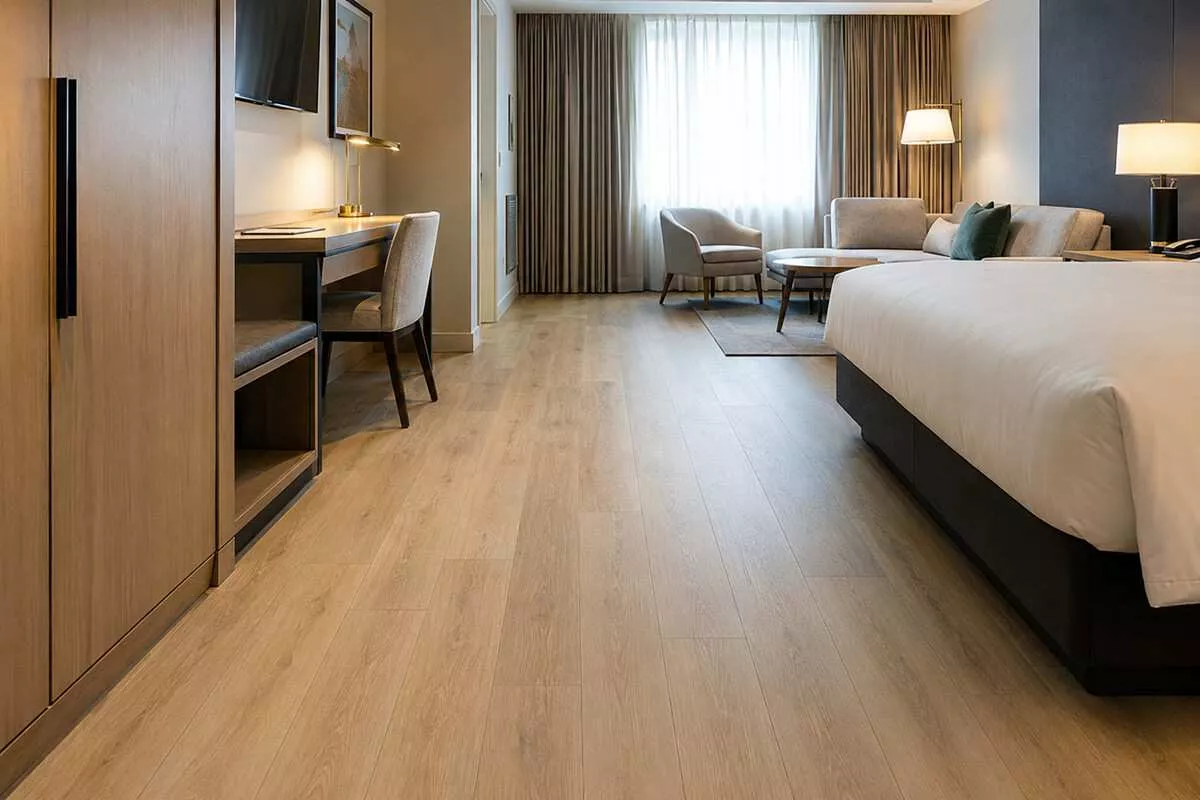
Light oak SPC flooring used in a commercial hotel guest room.
Why SPC Flooring Color Is a Commercial Procurement Decision
In a small residential order, a flooring color may be selected mainly according to personal preference. In a hotel, office, retail or apartment project, the same decision has wider consequences.
Commercial buyers should consider:
• Interior lighting and available daylight
• Room size and ceiling height
• Wall, furniture and door finishes
• Expected foot traffic
• Local dust and cleaning conditions
• Surface texture and gloss level
• Color consistency across the production batch
• Future replacement and maintenance requirements
Color does not determine flooring durability by itself. Thickness, wear layer, SPC core quality, locking accuracy and surface protection must be evaluated separately. However, a suitable color can make routine dust, small marks and natural décor-film variation less noticeable during everyday use.
Commercial SPC Flooring Color Comparison
Light Oak SPC Flooring
Suitable projects: Hotel rooms, apartments, small offices and light retail.
Visual effect: Bright, open and natural.
Procurement consideration: Check the sample under warm lighting to prevent the color appearing more yellow than expected.
Natural Beige SPC Flooring
Suitable projects: Hotels, schools, apartments and offices.
Visual effect: Warm, neutral and easy to coordinate.
Procurement consideration: Approve a full plank because small samples may not show the complete pattern variation.
Greige Wood SPC Flooring
Suitable projects: Offices, showrooms, retail stores and modern commercial interiors.
Visual effect: Professional and contemporary.
Procurement consideration: Compare the sample under daylight and the project’s artificial lighting.
Medium Oak SPC Flooring
Suitable projects: Busy offices, corridors, shops and mixed-use projects.
Visual effect: Balanced and practical.
Procurement consideration: Medium tones often make everyday dust and minor marks less visually prominent than very light or dark colors.
Dark Walnut SPC Flooring
Suitable projects: Executive offices, restaurants, clubs and boutique retail.
Visual effect: Strong, premium and stable.
Procurement consideration: Dark colors require sufficient lighting, and light-colored dust may be more visible.
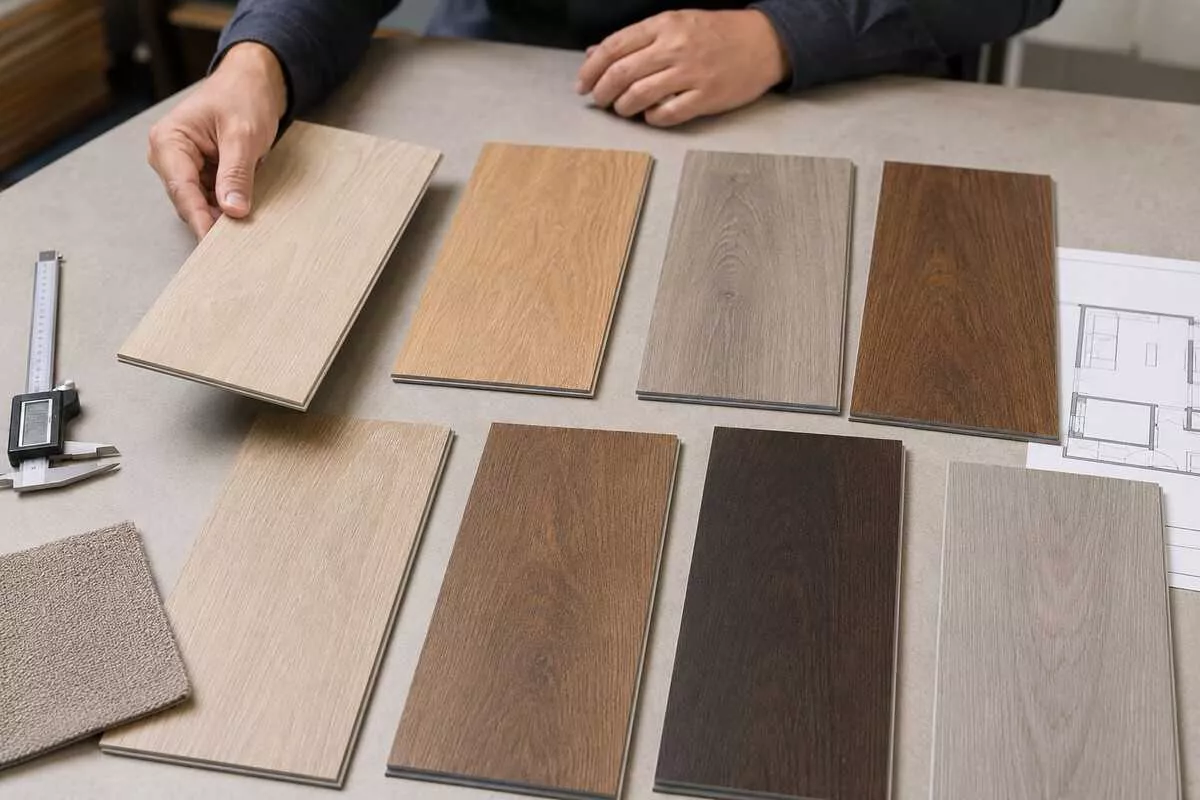
Physical SPC flooring samples should be compared before confirming a commercial bulk order.
1. Light Oak SPC Flooring for Hotels and Smaller Spaces
Light oak SPC flooring is frequently selected for hotel guest rooms, serviced apartments, small offices and compact retail interiors. Its pale wood appearance reflects more available light and can help a room feel more open.
For hospitality projects, light oak works well with neutral fabrics, white walls, beige furniture and soft natural finishes. However, buyers should verify how the sample responds to the hotel’s actual lighting.
A light oak sample that looks neutral in daylight may appear warmer under yellow-toned hotel lighting. Sample approval should therefore take place in the room or in a project mock-up using the planned lamps, wall colors and furniture finishes.
2. Natural Beige SPC Flooring for Flexible Project Design
Natural beige is one of the most flexible wood-look SPC flooring color families. It is warmer than grey but usually less visually dominant than red or dark brown wood tones.
Suitable applications include:
• Hotel guest rooms
• Serviced apartments
• Office interiors
• School administrative areas
• Retail spaces
• Commercial renovation projects
For developers and distributors serving several project types, a neutral beige collection can be easier to coordinate with different wall and furniture packages. Buyers should still examine multiple planks together because one small sample cannot show the full décor-film pattern and shade variation.
3. Greige SPC Flooring for Offices and Modern Retail Interiors
Greige combines elements of grey and beige. It offers a contemporary appearance without creating the cold effect that can occur with some blue-grey flooring colors.
Greige SPC flooring can coordinate with:
• Black or dark-grey metal frames
• Glass partitions
• White and neutral walls
• Modern office furniture
• Stone-look counters
• Retail display systems
Because greige contains both warm and cool undertones, its appearance can change noticeably under different lighting. Buyers should compare the physical sample beside the final wall paint, furniture laminate and door finish before confirming a bulk order.
4. Medium Oak for High-Traffic Commercial Projects
Medium oak sits between very light and very dark flooring. It is often a practical option for busy offices, hotel corridors, retail stores and mixed-use commercial projects.
Mid-tone flooring provides enough contrast to define the floor while avoiding some maintenance concerns associated with extremely pale or dark surfaces. Depending on the décor pattern, it may make dust, small marks and normal variation less immediately visible.
This does not replace the need for an appropriate wear layer or maintenance plan. Flooring performance specifications should be selected according to expected traffic, cleaning methods and furniture loads.
5. Dark Walnut SPC Flooring for Larger, Well-Lit Spaces
Dark walnut SPC flooring can create a strong visual identity in executive offices, boutique retail stores, restaurants, clubs and large hospitality interiors.
Dark wood flooring is most effective when the space has:
• Sufficient natural or artificial lighting
• Light or contrasting wall finishes
• Enough floor area to balance the darker tone
• Furniture designed to coordinate with the flooring
Dark flooring should be evaluated carefully in small rooms and spaces with limited lighting. It can make the area feel more enclosed, and light-colored dust may become more noticeable. For a large project, a room mock-up is more reliable than selecting the color from a catalog page.
Choosing SPC Flooring Colors by Project Type
SPC Flooring Colors for Hotel Projects
Hotel guest rooms often use light oak, natural beige or warm medium oak because these colors coordinate with fabrics and warm lighting. Corridors may benefit from slightly deeper neutral tones that provide more visual definition.
For projects covering guest rooms, corridors and public spaces, buyers should decide whether to use one coordinated color family or separate colors for different functional zones. Batch planning should be completed before production so that each installation area receives the correct color code and quantity.
SPC Flooring Colors for Office Projects
Modern offices commonly use greige, light oak and medium neutral wood tones. The flooring should coordinate with glass partitions, desk finishes, acoustic panels, doors and corporate interior colors.
Strong red or yellow undertones may limit future furniture changes. Neutral wood colors usually offer greater flexibility when an office is renovated or reconfigured.
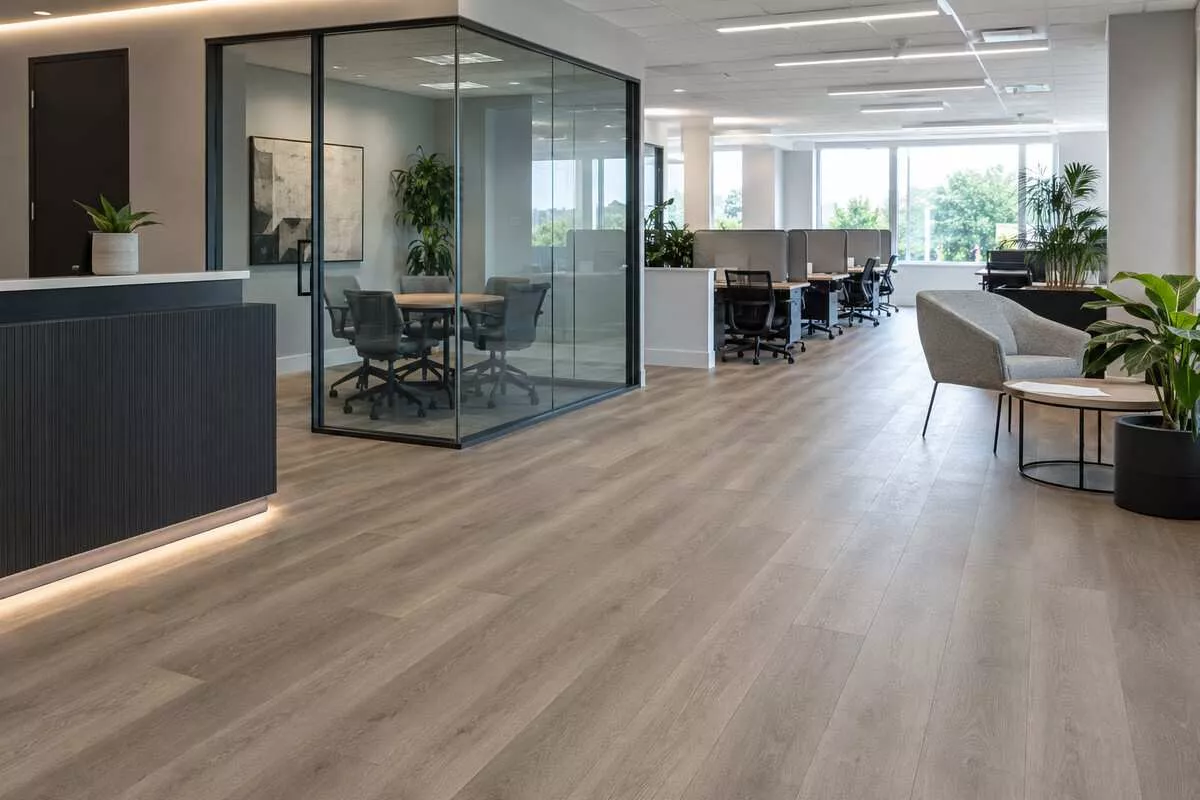
Greige wood-look SPC flooring installed in a modern commercial office.
SPC Flooring Colors for Retail Stores
In retail environments, the floor should support the product display instead of competing with it. Light or neutral flooring can provide a clean background for fashion, beauty and lifestyle products, while deeper wood tones may work for boutique or premium concepts.
The flooring should be reviewed beside the display fixtures and under the actual store lighting. Retail spotlights can create stronger reflections and make the same surface appear lighter or darker from different viewing angles.
SPC Flooring Colors for Apartments and Residential Developments
Apartment developers often need colors that appeal to a broad group of buyers or tenants. Natural oak, beige and balanced medium wood tones are generally easier to coordinate with different furniture styles than highly distinctive colors.
For multi-building developments, the procurement team should plan replacement stock and batch allocation. A clearly recorded color code is essential when the same design is used across different construction phases.
How Project Lighting Changes Flooring Color
Lighting is one of the most common reasons why an approved sample looks different after installation.
The same SPC flooring color can appear:
• Warmer under yellow or warm-white lighting
• Cooler under neutral or cool-white lighting
• Lighter near large windows
• Darker in corridors and rooms without daylight
• More reflective under spotlights
Computer screens and printed catalogs cannot reproduce every wood tone accurately. Screen brightness, photography, printing and viewing conditions can all change the perceived color.
Recommended sample approval process:
1. Request physical SPC flooring samples.
2. Place the sample flat on the project floor.
3. Check it during daytime and evening lighting.
4. Compare it with wall, door and furniture finishes.
5. Review several planks together to understand pattern variation.
6. Approve and retain a master sample before production.
Surface Texture and Gloss Affect Color Appearance
EIR Surface
Embossed in Register, or EIR, aligns the surface texture with the printed wood grain. This creates stronger visual depth and a more realistic wood appearance. Deeper texture can also change how light and shadow move across the plank.
Standard Embossed Surface
Standard embossed flooring provides a textured finish without fully aligning every texture detail with the printed grain. It can be a practical option for projects requiring a wood-look surface with controlled cost.
Matte and Low-Gloss Finishes
Matte surfaces reduce strong reflections and are widely used in modern commercial interiors. A low-gloss finish may make a color appear slightly deeper than the same décor under a more reflective surface.
Color samples should therefore be approved using the final surface treatment—not only the décor-film image.
Color Selection for Maintenance and High-Traffic Areas
There is no flooring color that completely hides dirt or damage. However, some colors and patterns are more forgiving in daily commercial use.
Project buyers should consider:
• Local dust and soil color
• Entrance matting
• Cleaning frequency
• Foot traffic level
• Furniture movement
• Natural variation in the wood pattern
Very pale floors may show dark dirt near entrances, while very dark floors may show light dust and footprints. Medium neutral tones with controlled grain variation are often practical for areas where appearance must remain stable between cleaning cycles.
Color selection should be combined with the correct wear layer, surface protection and maintenance method. A darker color does not automatically provide better wear resistance.
How to Control Color Consistency in Bulk SPC Flooring Orders
For importers, distributors and contractors, color consistency becomes especially important when one project requires several thousand square meters of flooring.
Before bulk production, confirm:
1. Color code: Record the exact décor number and approved product structure.
2. Master sample: Retain an approved physical sample for production comparison.
3. Surface finish: Confirm EIR, standard embossed, matte or other agreed texture.
4. Plank specification: Confirm thickness, wear layer, plank size, bevel and backing.
5. Production batch: Arrange connected installation areas from the same production batch whenever possible.
6. Pre-production approval: Request a production sample for new or customized colors.
7. Inspection method: Compare samples under consistent neutral lighting.
8. Carton identification: Keep color and batch information traceable during delivery and installation.
9. Replacement quantity: Reserve material from the original batch for future maintenance.

SPC flooring color and surface consistency inspection before bulk packaging.
Minor visual variation can occur because wood-look décor films are designed to avoid an artificial repeating appearance. The objective is not to make every plank identical, but to keep the approved color family, tone, surface and pattern variation within the agreed project standard.
Color Is Only One Part of the SPC Flooring Specification
A commercial flooring quotation should not be based on color alone. Two visually similar products may have different structures and performance.
When requesting a quotation, confirm:
• Total SPC flooring thickness
• Wear layer thickness
• Plank dimensions
• SPC core structure
• Click-lock profile
• Surface texture and gloss
• Bevel or edge treatment
• Attached IXPE backing, if required
• Carton and pallet requirements
• Order quantity and destination
For many commercial applications, buyers compare 5mm and 6mm SPC flooring with a 0.5mm wear layer, but the final specification should be selected according to traffic, subfloor conditions, acoustic requirements, project budget and installation method.
SPC Flooring Color Sample Approval Checklist
Before confirming a bulk order, check the following:
• Project type and installation area confirmed
• Physical sample checked under actual lighting
• Sample compared with walls, doors and furniture
• Several planks reviewed for pattern variation
• Surface texture and gloss approved
• Thickness, wear layer and backing confirmed
• Color code recorded in the quotation and order
• Master sample retained for production comparison
• Production batch and carton identification agreed
• Replacement material requirement considered
Commercial SPC Flooring Color Support from Floren Floor
Floren Floor supplies wood-look SPC flooring for overseas distributors, wholesalers, contractors, interior companies and commercial project buyers.
Buyers can request physical color samples, available surface options, technical specifications, export packaging information and factory quotations according to the project application and order quantity.
When sending an inquiry, provide the project type, required quantity, preferred color family, thickness, wear layer, destination country and expected delivery schedule. This allows Floren Floor to recommend relevant samples instead of sending a general color catalog.
Need SPC flooring samples for a hotel, office, retail or apartment project?
Contact Floren Floor with your project requirements to receive suitable color options, technical specifications and a bulk order quotation.
FAQ About Commercial SPC Flooring Colors
What is the most practical SPC flooring color for commercial projects?
Medium neutral oak, natural beige and greige are practical for many commercial interiors because they coordinate with different materials and are generally less visually extreme than very light or dark flooring. The best option still depends on lighting, interior design and maintenance conditions.
What SPC flooring color is suitable for hotel guest rooms?
Light oak, natural beige and warm medium oak are commonly considered for hotel guest rooms. Buyers should check physical samples under the hotel’s planned lighting because warm lamps can change the appearance of the flooring.
Which SPC flooring colors work well in offices?
Greige, light oak and medium neutral wood tones work well with glass partitions, metal frames and modern office furniture. Neutral colors also provide flexibility when furniture or wall finishes are changed later.
Can a digital flooring image be used for final color approval?
No. Digital images are useful for initial selection, but screen settings and photography can change the apparent color. Bulk production should be approved using a physical master sample with the correct surface texture.
How can buyers reduce color differences in a bulk SPC order?
Buyers should confirm the exact color code, approve a physical master sample, specify the final surface finish and arrange connected project areas from the same production batch whenever possible.
Are dark SPC flooring colors easier to maintain?
Not necessarily. Dark flooring may show light dust, footprints and certain marks more clearly. Maintenance appearance depends on the project environment, cleaning plan, décor pattern and surface finish.
Should flooring color be selected before confirming the technical specification?
Color and technical specifications should be confirmed together. Thickness, wear layer, locking system, surface texture and backing can affect price, performance and the final visual result.
