
 简体中文
简体中文 Français
 لالعربية

Importing SPC flooring from China can give Malaysian distributors, contractors and project buyers access to a wider selection of specifications, wood designs, surface finishes and private-label packaging. However, comparing only the factory price is not enough.
The final purchasing cost and delivery outcome depend on the product structure, order quantity, packing method, freight arrangement, import documents and quality control completed before shipment.
This guide explains what Malaysian buyers should confirm before placing an order, how to calculate landed cost and how to prepare for shipment.
What Should Be Confirmed Before Requesting a Quotation?
A useful quotation should be based on a complete product specification. If suppliers quote different structures under the same general description, their prices cannot be compared accurately.
SPC plank thickness and whether the stated thickness includes backing
Wear-layer thickness
Plank dimensions
Surface finish and décor reference
Click-lock system and bevel requirement
Attached IXPE backing, if required
Quantity per design and total order quantity
Carton and pallet requirements
Destination port and final delivery location in Malaysia
Intended application
Clarify the thickness definition before comparing prices. For a product described as 1220 × 180 × 5.0mm, ask whether 5.0mm refers to the plank without backing or the overall thickness including backing. State the plank thickness, attached backing thickness and total thickness separately in the approved specification.
Wear layer, surface treatment, backing and packing method can also affect price. Buyers can review Floren Floor’s SPC flooring range before confirming the required structure.
Common SPC Flooring Specifications for Malaysia
The appropriate specification depends on the target customer, installation area and expected traffic. Thickness alone does not determine whether a product is suitable for a project.
| Application | Purchasing Considerations |
|---|---|
| Residential renovation | Target price, suitable wear layer, wood designs and subfloor preparation |
| Apartments and rental units | Joint performance, maintenance and replacement stock |
| Retail shops and offices | Wear performance, surface resistance and suitability for expected use |
| Hotels and commercial projects | Project-approved specification, supporting reports and batch consistency |
| Flooring distribution | Balanced product range, repeat-order availability and consistent packaging |
Buyers can compare 4mm SPC flooring, 5mm SPC flooring and 6mm SPC flooring against their application and budget.
The final selection should also consider wear layer, joint strength, dimensional stability, backing and installation conditions.
What Is the MOQ for SPC Flooring?
MOQ is not always a single fixed number. It may depend on the selected décor, film availability, wear layer, plank thickness, backing, packaging and production schedule.
Ask suppliers to confirm MOQ per décor separately from the minimum total order. An order may meet the factory’s total quantity requirement while still falling below the production minimum for an individual color.
Before approving a trial order, ask:
What is the minimum quantity for each selected décor?
What is the minimum total quantity for this specification?
Can compatible colors be combined in one shipment?
Does standard packaging have a different minimum from private-label cartons?
Will a smaller trial quantity change the unit price or production schedule?
Available factory colors and standard cartons may make a trial order easier to arrange. Custom decorative film, exclusive colors or customized packaging may require a higher quantity.
For a first order, avoid dividing a limited quantity among too many designs. A focused selection gives distributors more usable stock of each color and makes replenishment planning easier.
Confirm the agreed quantity per color, total square metres and packaging requirements in writing before paying the deposit.
How to Calculate the Landed Cost in Malaysia
The factory price is only one part of the purchasing cost. Start with the quoted product amount, then add the shipment costs that are not already included.
Landed shipment cost = quoted goods amount + applicable origin, freight, insurance, import and delivery costs not included in that quotation.
Before adding individual charges, confirm which costs are already included under the agreed trade term. Avoid counting packing, origin transport, freight or insurance twice.
| Cost Item | What to Confirm |
|---|---|
| Goods and packaging | Unit price, ordered area, backing, cartons, pallets and any packaging surcharge |
| Origin costs in China | Collection, loading, inland transport, export handling and documentation charges where applicable |
| Sea freight and insurance | Route, shipment type, included surcharges, quotation validity and insurance scope |
| Import charges | Applicable duty, tax and clearance costs confirmed by the Malaysian customs agent |
| Destination handling and delivery | Port or warehouse charges, local transport, unloading and possible storage costs |
Calculate Cost per Square Metre
Landed cost per m² = total landed shipment cost ÷ total flooring area purchased.
For illustration only, if the total landed shipment cost is USD 12,000 for 2,000 m² of flooring, the landed cost is USD 6.00/m². These figures are an arithmetic example, not a product quotation or a current freight estimate.
When planning a Malaysian selling price, account separately for currency conversion, payment charges, local storage, sales expenses and any stock reserved for replacements. Landed cost is not the same as the complete cost of running a distribution business.
Use a Current Freight Quotation
Request freight pricing for the actual loading port, Malaysian destination, cargo weight and shipment type. Check the quotation’s validity and whether destination charges are included.
A low headline freight rate does not necessarily produce the lowest delivered cost. Compare the complete charge breakdown before selecting a service.
Confirm Import Requirements Before Shipment
Ask the Malaysian importer or appointed customs agent to confirm the correct HS classification, applicable duty and tax treatment, required origin documents and whether any permit or product approval applies to the exact goods.
Do not base the budget on an assumed tax exemption or an unverified HS code. Resolve classification and documentation questions before production and shipment.
FCL or LCL: Which Shipping Method Is Better?
Full Container Load
FCL can be practical for distributors, larger projects and repeat orders. It allows the packing and loading plan to be prepared around one buyer’s shipment and reduces the need to consolidate flooring with unrelated cargo.
SPC flooring is dense and heavy. Loading calculations must consider permitted payload, total gross weight, pallet dimensions, stacking suitability and weight distribution, not just available container volume.
Where a two-tier pallet arrangement is proposed, confirm that the packaging and lower loads can support the stacking arrangement and that loading and unloading equipment is suitable. A loading photograph alone cannot establish a safe quantity for another order.
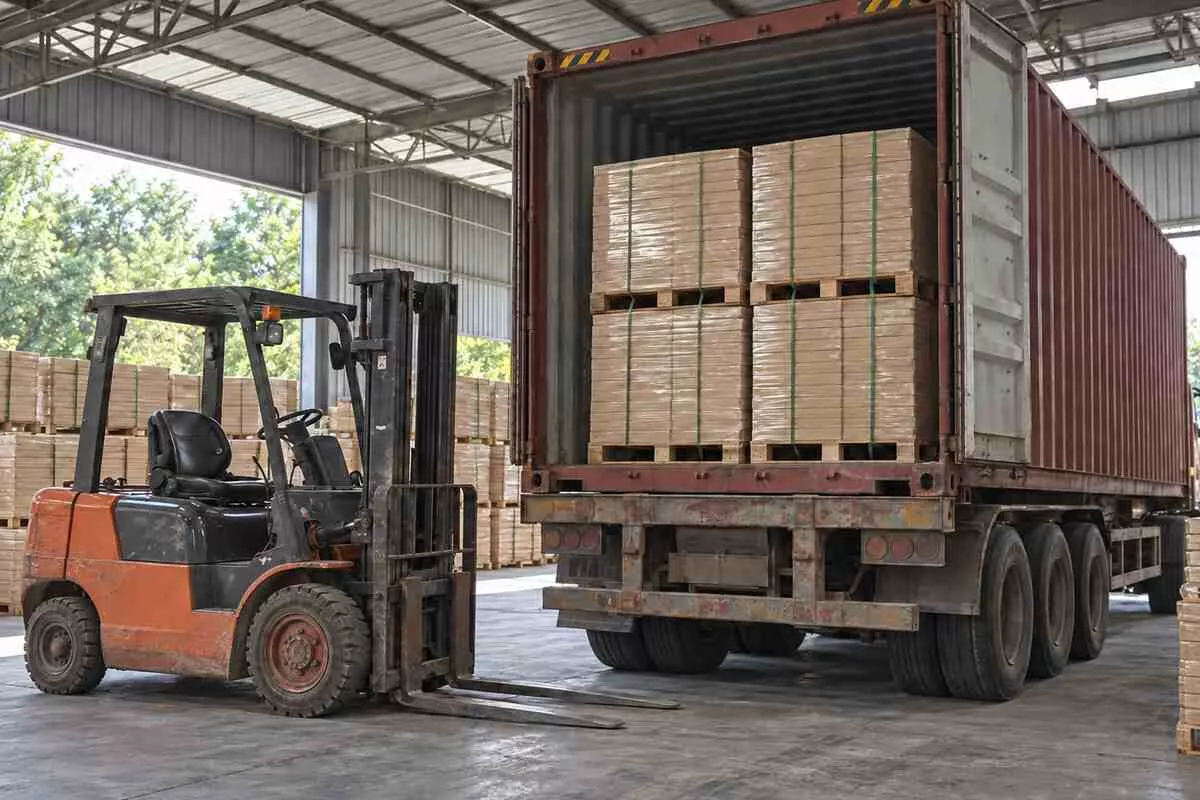
See our SPC flooring container loading process for export-order preparation.
Less Than Container Load
LCL may be considered for limited trial quantities, but buyers should compare the complete shipment cost. Consolidation, additional handling and destination warehouse charges can make a small shipment expensive per square metre.
Confirm how the cargo will be palletized and protected.
Request both origin and destination charges.
Check the delivery schedule, including consolidation time.
Confirm the receiving warehouse’s unloading arrangements.
Compare LCL and FCL using the same delivery scope rather than comparing sea freight alone.
How Long Does the Import Process Take?
Sea transit is only one part of the schedule. Ask for separate estimates for the following stages:
Sample and specification approval: selecting décor, confirming structure and approving packaging.
Production: material preparation, manufacturing and packing after order confirmation.
Inspection and dispatch: checking the goods, resolving findings and preparing documents.
Booking and sea transport: collection, port cut-off, vessel departure and any transshipment.
Arrival and delivery: clearance, cargo release, local transport and unloading.
Ask the supplier to confirm the expected cargo-ready date and the forwarder to confirm the current route schedule. For a project with a fixed installation date, allow time for inspection, document corrections and arrival delays.
Which Trade Term Should Malaysian Buyers Use?
The quotation should identify the agreed trade term, named place or port and the costs included. Do not assume that a factory quotation includes ocean freight or delivery in Malaysia.
For an EXW quotation, ask your freight partner to itemize factory collection, loading arrangements, origin handling, export clearance, international transport and destination services. Confirm responsibilities with the supplier and forwarder before placing the order.
If comparing an EXW quotation with another supplier’s FOB or CIF quotation, first bring both offers to the same delivery scope. A higher quoted amount may include services that the lower quotation excludes.
Documents to Confirm Before Shipment
Ask the importer and customs agent for a shipment-specific document checklist. Documents to discuss include:
Commercial invoice
Packing list
Bill of lading
Sales contract or purchase order
Certificate of origin where applicable
Product specification sheet
Buyer-requested test reports
Insurance document where applicable
Any required import approval or packaging documentation
Check consignee details, product descriptions, quantities, carton counts, net weight and gross weight before documents are finalized. Information should be consistent across the shipment records.
How to Control Quality Before Shipment
Quality control should begin with sample approval and a written specification, not after the container arrives in Malaysia.
Approve Physical Samples
Digital images cannot reliably confirm color, gloss, surface texture or joint fit. Review physical samples under suitable lighting and retain an identified sample as the production reference.
Confirm a Written Specification
Record the décor, plank dimensions, thickness definition, wear layer, surface finish, locking system, backing, pieces per carton and packaging requirements. Agree on inspection methods and acceptance criteria before bulk production.
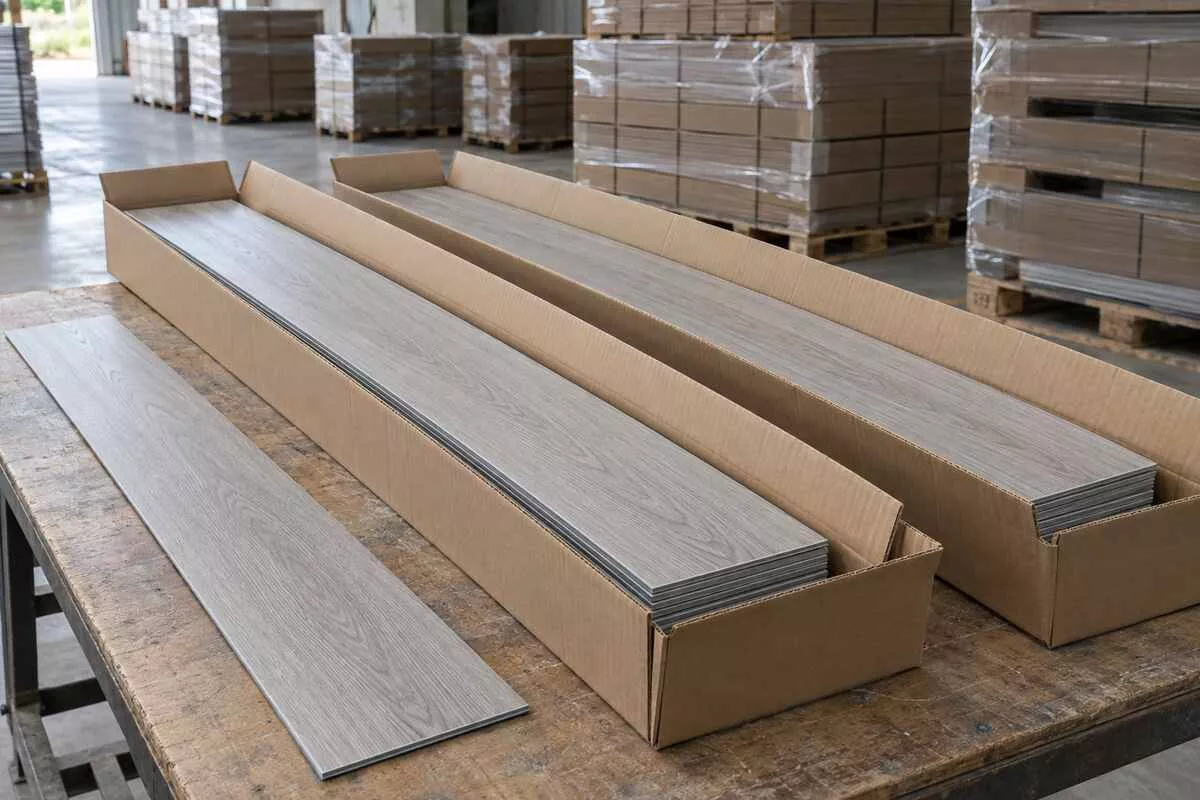
Inspect Production and Packed Goods
Depending on the agreed inspection scope, checks may include:
Product thickness and dimensions
Surface appearance and color consistency
Long-side and short-end click-lock fitting
Plank flatness and backing adhesion
Carton markings, quantity and packaging condition
Pallet protection and stacking arrangement
Container condition and loading preparation
Use representative samples from the order rather than relying on one selected carton. Record findings and resolve nonconformities before shipment release. Photos and videos support inspection records but do not replace agreed measurements or laboratory testing.
Read our SPC flooring quality control guide for more detail on inspection stages.
How to Select Colors for the Malaysian Market
Base color selection on the buyer’s sales channel, customer feedback and project requirements. A factory catalogue shows available options, but it does not establish local demand.
For an initial collection, compare a focused selection of light neutral, natural wood and medium-tone designs. Review physical samples in the intended interior setting before confirming quantities.
Distributors should plan replenishment stock for their main colors. Project buyers should agree on batch consistency requirements when deliveries will be split across different production runs.
Common Importing Mistakes to Avoid
Comparing price without comparing structure: confirm the same thickness definition, wear layer, backing and packing scope.
Confusing total MOQ with MOQ per color: confirm both before choosing the collection.
Double-counting charges: check what the quotation already includes.
Ignoring destination costs: include clearance, handling, delivery and unloading in the budget.
Treating sea transit as the full lead time: allow for production, booking and arrival procedures.
Skipping sample approval: retain an agreed physical reference for production.
Checking import requirements too late: resolve classification and document questions before shipment.
Recommended Purchasing Process
Confirm the target application and required specification.
Select initial colors and approve physical samples.
Confirm MOQ per décor and total order quantity.
Request a quotation with a clear trade term and cost breakdown.
Estimate landed cost using current logistics quotations.
Confirm import requirements with the Malaysian customs agent.
Approve the written specification and packaging.
Confirm production, inspection and shipping schedules.
Complete inspection and check shipping documents.
Arrange clearance, delivery and receiving checks.
Frequently Asked Questions
Can I import SPC flooring directly from a factory in China?
Yes. Malaysian importers, distributors and project buyers can source directly from a manufacturer. Confirm your importing arrangements and appoint suitable logistics and customs partners before shipment.
What is the MOQ for importing SPC flooring?
There is no single quantity that applies to every specification. Ask for the minimum per décor and the minimum total order, including any separate requirements for customized backing or private-label packaging.
How do I calculate landed cost per square metre?
Add the goods amount and all applicable shipment costs not already included in the quotation, then divide the total by the flooring area purchased. Use current quotes and avoid counting the same charge twice.
Does 5mm SPC flooring include the backing?
The description can vary between quotations. Ask the supplier to state plank thickness, backing thickness and overall thickness separately. Do not assume that two products described as 5mm have the same structure.
Can different colors be loaded in one container?
This may be possible, subject to the minimum quantity for each décor and the production and packing arrangements. Confirm the quantity per color before approving the order.
How much SPC flooring fits in a container?
The quantity depends on product weight, carton dimensions, pallet configuration, stacking suitability and permitted payload. Request an order-specific loading calculation after the specification is finalized.
How long does shipping from China to Malaysia take?
Ask the forwarder for the current schedule for the actual route. Port-to-port transit excludes sample approval, production, booking, clearance and local delivery, so plan the full purchasing schedule separately.
Does my shipment need a product approval or certificate of origin?
Ask the Malaysian customs agent to check the exact product classification, intended tariff treatment and applicable requirements. Confirm the required documents before dispatch rather than relying on another importer’s shipment.
Can I request private-label cartons?
Private-label packaging may be available for qualified bulk orders. Confirm artwork, printing requirements, minimum quantity, additional cost and approval timing before production.
Request an SPC Flooring Proposal for Malaysia
If you are sourcing SPC flooring for distribution, retail or a commercial project in Malaysia, send your required specification and purchasing plan:
Plank thickness, wear layer and backing requirement
Preferred dimensions and décor references
Quantity per color and total estimated quantity
Destination port or delivery location
Private-label packaging requirements
Target cargo-ready date
Floren Floor can help you compare available specifications, arrange samples, confirm packing and loading quantities, and prepare a factory quotation for your order.
